|
|
|
|
James Albert Michener wrote for re-establishment in his book - This Noble Land: "I was favorably impressed by the Civilian Conservation Corps which had, so far as I could see, a faultless program in which young people could do constructive work for their communities while earning a modest salary. I would have hopes for such a program, were one to be reinstituted now."
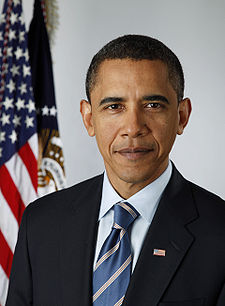
President Obama RE-INVEST IN HUMAN CAPITAL
"Know that your people will judge you on what you can build, not what you destroy." President Barack Obama, Inaugual Address, January 20, 2009. we used this
moment to encourage a 21st century civilian conservation corps for our young people." President
Obama's address at the 160th Anniversary of the Department of the Interior on March 3, 2009 In many of the CCC tents and
barracks one would see this poster... Perhaps
you'll be sent to a camp high in the mountains, or down on the seashore, out on the shady forest, or on the sun-baked plains, or back in the shady forests. You may be near a town or you may be far away from even a village. Work hard now. And never forget that cooperation is essential. For many of them, this was their
first time away from home. Those that enrolled learned fast that they had to be willing to go to any camp and get along with people.
Invest in Human Capital
A nation that destroys its soils destroys itself. Forests
are the lungs of our land, purifying
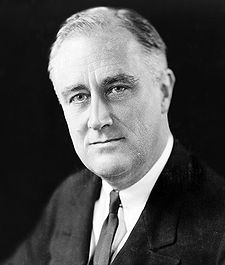
the air and giving fresh strength to our people. --- "I propose to
create a civilian conservation corps to be used in forestry, the prevention of soil erosion, flood control and similar projects . . . More important, however, than the material gains from their labors will be the moral and spiritual value of such work." FDR's written
message to the Emergency Session of the 73rd Congress on March 21, 1933 ------ In broad terms, I assert that modern society, acting through its government, owes the definite obligation to prevent the starvation or dire want of any of its fellow men and women who try to maintain themselves, but cannot. Democracy cannot succeed unless those who express their choice are prepared to choose wisely.
I do not look upon these United States as a finished product. We are still in the making. ---- If civilization is to survive, we must cultivate the science of human relationships - the ability of all peoples, of all kinds, to live together, in the same
world at peace. ---- If you treat people right they will treat you right... ninety percent of the time. ---- Happiness lies in the joy of achievement and the
thrill of creative effort. But while they prate of economic laws, men and women are starving. We must lay hold of the fact that economic laws are not made by nature. They are made by human beings. Franklin D. Roosevelt
--------------------------------------------
Those who contemplate the beauty of the earth will find reserves of strength that will endure as long as life lasts.
Rachel Carson (1907-1964)
.
Eleanor Roosevelt wrote: “I
have moments of real terror, when I think we may be losing this generation.
We have got to bring these young people into the active life of the community... It has been said in this country we should deal with first things first, and in my estimation, the question before us is action on the problems of youth.” - 1934
As I look back over the actual measures which were undertaken... I realize that the one in which my husband took the greatest pleasure was the establishment of the Civilian Conservation Corps. - 1945
-
Historian Howard Zinn wrote: "The CCC was not only one of the
greatest innovations of the New Deal, but it provides a model for us today. It is the answer to the double problem of unemployed
youth (who turn to drugs, who end up in prison) and the persistence of war, with its enormous drain on the national wealth.
The young, instead of being recruited to kill and be killed, or to come home maimed in body or in mind, could be put to work
in government programs like the CCC, doing all sorts of constructive things to make our environment cleaner and safer. Such
work would have the opposite effect of military action -- that is, it would foster healthy bodies and healthy minds as these
young people make a great contribution to the nation. The situation today, with a trillion dollars wasted on war, with young
men and women coming home damaged, with a crumbling infrastructure making us vulnerable to more Katrina's, and more human
disasters, cries out for such a solution."
“Whatever your life's work is, do it well. A man should do his job so well that the living, the dead, and the unborn could do it no better.”
- Dr Martin Luther King Jr
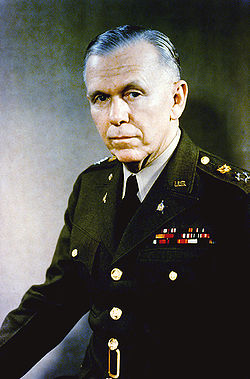
Noble Peace Prize winner - George C. Marshall The Civilian Conservation Corps: A Nation's
Rescue Mission The 1930s saw the arrival of another enemy at America’s door: the Great Depression. Marshall took a pay cut in order to remain in the Army and was posted in 1933 to South Carolina, many soliders were unable to feed their families on army pay. Marshall taught his men to grow their own food, and helped establish Civilian Conservation Corps (CCC) projects throughout the South. Planting trees and maintaining parks were among the jobs distributed at workcamps throughout the nation where young men lived and worked, sending money home to their families. The CCC was part of President Roosevelt’s New Deal, for economic recovery and its goal was simple: put young men to work that also benefited the nation. Congress had directed the Army to oversee the CCC operation. Marshall set up 19 camps in the south and supervised 35 in the Pacific Northwest. Many Army officers disliked working with this civilian program because it failed to benefit their military careers. Marshall wanted promotions as well, however he thought beyond himself to the needs of his country and believed the program helped young men become good workers and citizens. Yes, the men were planting trees, but they were also rooting themselves in the values Americans held dear: hard work, teamwork, and service to country. They would keep American democracy strong and healthy, which Marshall saw as much more important than his own personal career.
http://www.marshallfoundation.org/about/timeline/between.html
-
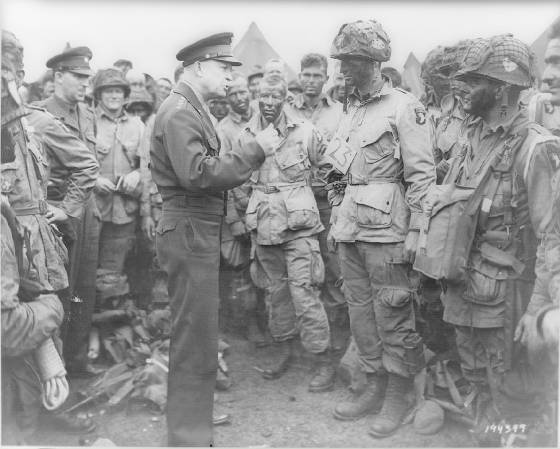
Dwight D. Eisenhower 34th President of the United States
Reference: Kevin Bailey - Archivist -
"The best time to plant a tree was 20 years ago. The next best time is today!" ~ Loren Westenberger (1959-2011)
|
||||||||||||||||||||||||||||||||||||||||||||||||||||||||||||||||||||||||||||




|
I realize that the one in which
my husband took the greatest
pleasure was the establishment of the Civilian Conservation Corps.
Eleanor Roosevelt
|